Croatia - India
historical and cultural relations
Darko Zubrinic, 2020
It is interesting that the Dubrovnik merchants had their settlement in the city of Gvendolin in India in the 16th century, where they built the Church of St. Blase in 1653, which exists even today. In Goa in India there existed a strong Dubrovnik colony around the Church of St. Blase. In 1540 there arrived St. Francis Xaver on his mission to India, and later to Japan.Source
Croatians at Goa in India
Ivana Brlić Mažuranić: Jaša Dalmatin, potkralj Gudžerata - tekst knjige
iz povijesne rasprave Vladimira Mažuranića: "Melek Jaša Dubrovčanin u Indiji"
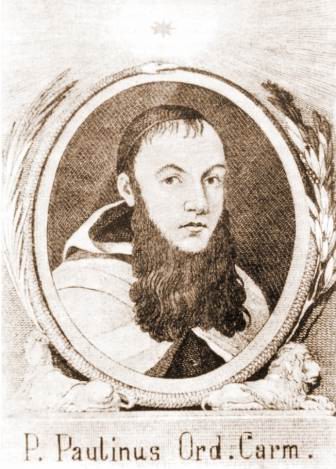
For more information see Filip Vezdin (in Croatian)
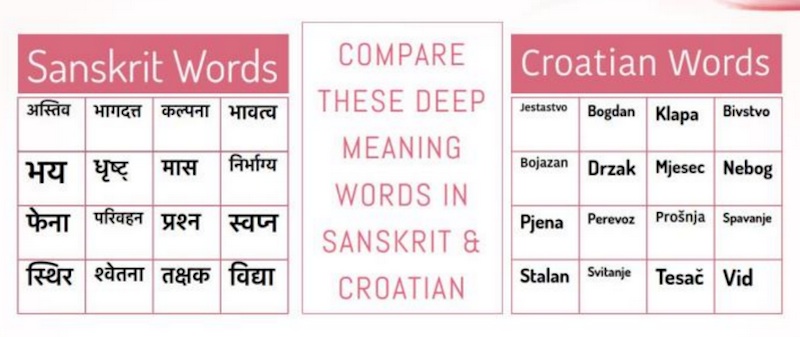
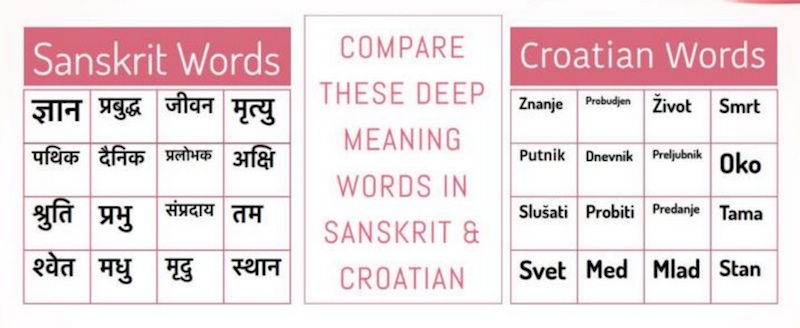
Source H. E. Raj Kumar Srivastava: Embassy of India, Zagreb Newsletter (ISSUE NO. 9: September 2023)
All Newsletters
Of course, there are slight differences in pronounciation. For example, LIFE in Croatian is život, while in Sanskrit - đivita (điva).
mufte (in Hindi) = mukte (in Croatian slang) = free of charge
In Croatia, there is the sescond name Surian, appearing in Istria, as well as in the environs of Šibenik. In Istria, on the western slopes of mount Učka, there is a village of Šurjani, where maestro Giorgio Surian was born, the greatest Croatian opera-singer in history. The origin these words is surya, the meaning of which in Sanskrit is - sun.
In Sanskrit, the notion of kutika corresponds to Croatian kućica (a small house). Information by the courtesy of Emina Kurtagić, Zagreb.
According to Ethnologue, India has 459 living languages (as of 2026). Three countries only have more living languages: Papua NG (840), Indonesia (709), Nigeria (532), and the immediate three countries that have less are USA (335), Australia (319), and PR China (305).
Croatia has 14 living languages: Croatian, Serbian, Italian, Istro-Romanian, Romani, Slovene, Hungarian, Czech, Slovak, Ukrainian, Rusyn, Romanian (specifically including the Boyash Romanian community in Croatia), German, Albanian.
On the Governement level, India has two official languages: English and Hindi. Furthermore, according to Constitution, India has 22 regional languages (scheduled languages), corresponding roughly to its 28 (sub)states and 8 union territories:
|
|
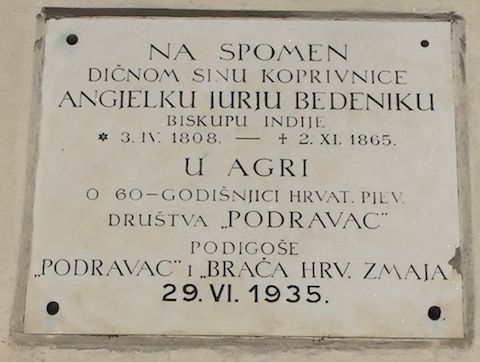
Angjelko (Angelik) Juraj Bedenik (1808-1865), Capuchin Franciscan, Croatian missionary and vicar apostolic in Agra, India.
The above tablet was raised in the city of Koprivnica, where Bedenik was born. He died in Agra, India.
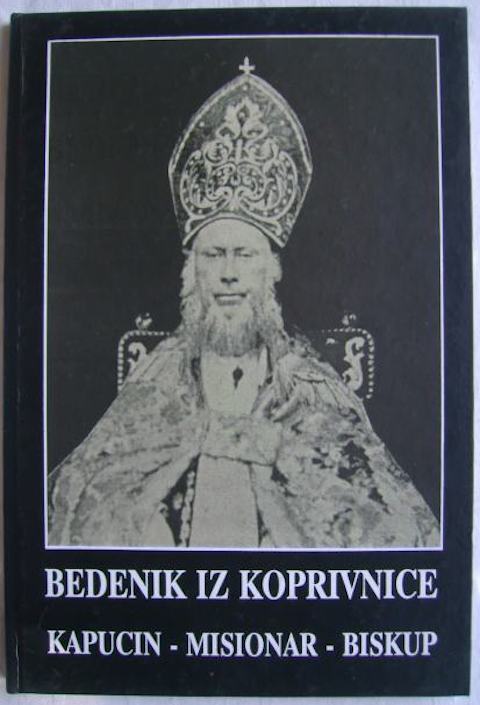
Many thanks to Ms. Snježana Božić for her information about the above tablet on the wall of the church of St. Nicholas the bishop in Koprivnica, Croatia.
Nikola Tesla (1856-1943) defended his patents in 24 countries. Two of his patents were defended in India in 1894.
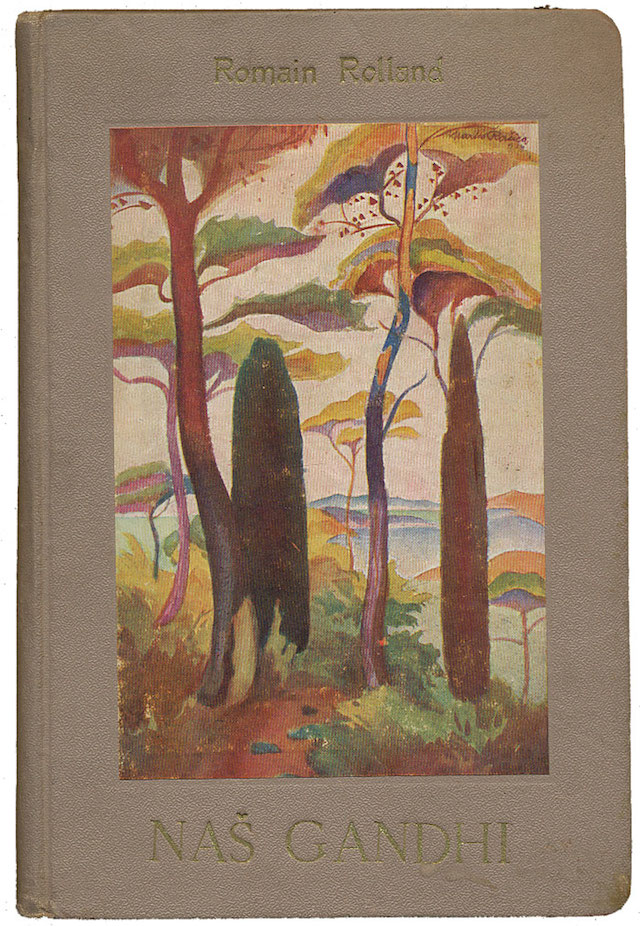
Romain Rolland's monograph Mahatma Gandhi, published in 1924 in Paris,
was translated that same year into Croatian (sic!), upon the initative of Stjepan Radic (1871-1928),
entitled as Naš Gandhi (Our Gandhi).
The book was translated into Croatian by Josip Vandekar (1892-1927).
The title page was decorated by distinguished Croatian painter Marko Rašica (1883-1963), born in Dubrovnik.
It was reprinted in 2021 upon the intiative of Mr. Joginder Singh Nijjar (president of Croatian-Indian Society in Zagreb), containing an extensive foreword (more than 100 pp) written by Mislav Ježić (of the Croatian Academy of Sciences and Arts).
Joginder Singh Nijjar and Darko Žubrinić: Two giants of nonviolence and peacemaking Mahatma Gandhi of India and Stjepan Radić of Croatia, 2024
Mahatma Gandhi and Kristian Kreković connecting India and Croatia
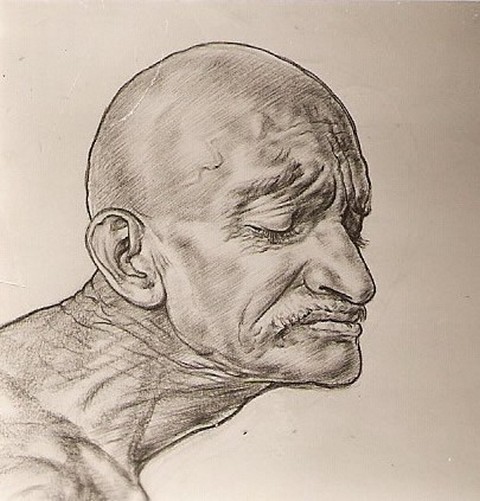
Mahatma Gandhi (a detail), portrayed by Kristian Kreković in 1936,
in his atelier in Paris, during Gandhi's mediatation; source www.kristiankrekovic.com
Vanja
Gabrić (Metković) about Kristian Kreković's portrait of Mahatma
Gandhi (in Croatian)
Stjepan Radić (1871-1928) i Mahatma Gandhi (1869-1948)
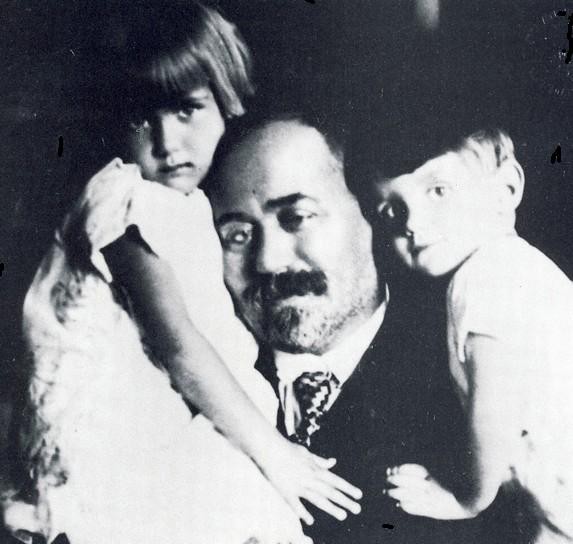
Stjepan Radiić with his grandchildren
Vladimir Paleček (1940-1990) Croatian humanist and founder of "Hungry Child" international fund in Croatia 1969
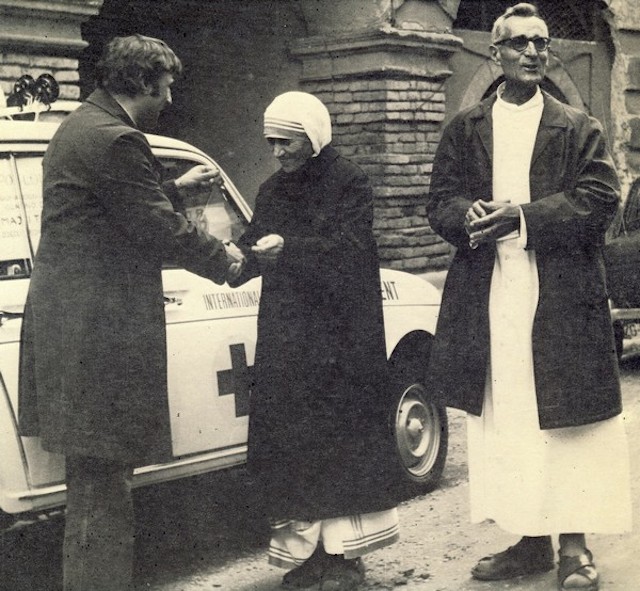
Vladimir Paleček handing over the keys of the ambulance car to Mother Teresa.
Father Ante Gabrić on the right. Both photos are taken at the Archbishopric building in Zagreb,
just by the Zagreb Cathedral (many thanks to Mr. Marijan Lipovac for recognizing the site).
Na osnivačkoj skupštini Međunarodne misije za znanost i mir, prijedlog statuta pročitao je dr. Sheoray Singh Jain iz Indije. Njegova supruga, Sulehni Jain, bila je u Zagrebu suradnica Međunarodnog fonda Gladno dijete. G. Jain bio je lektor na Filozofskom fakultetu u Zagrebu za indijske jezike, a bavio se i prevođenjem (preveo je na primjer nekoliko pjesama Vladimire Paleček).
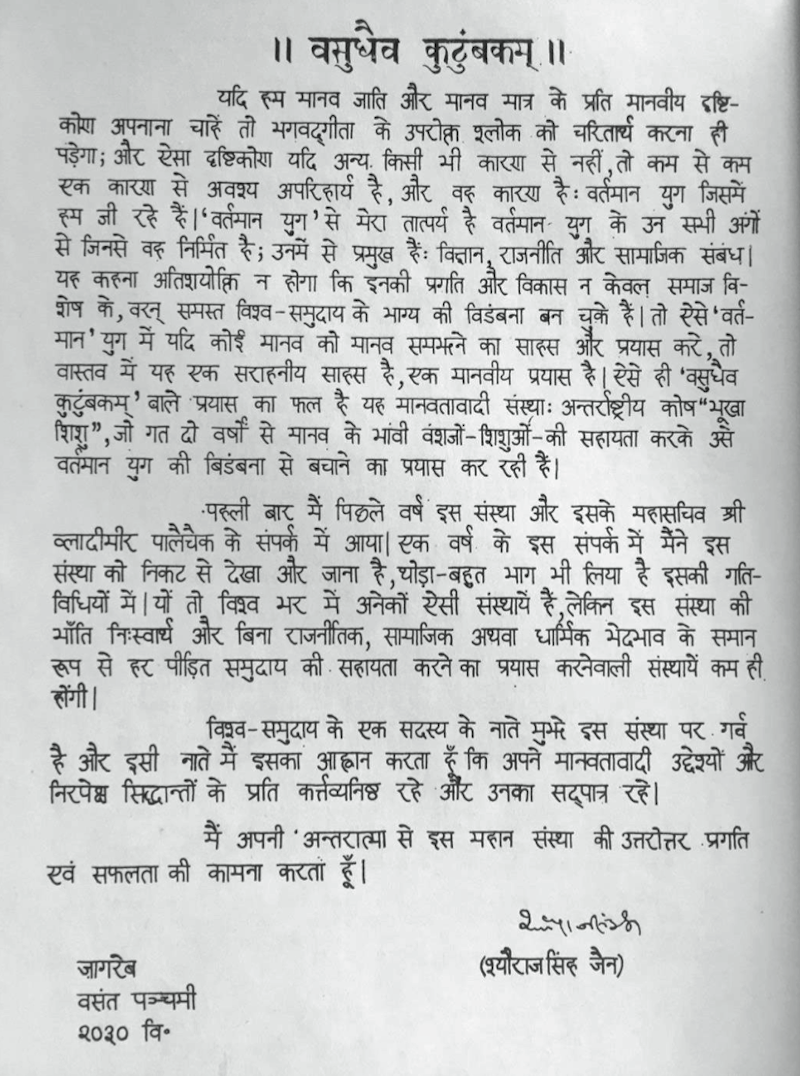
Sheoray Singh Jain, Zagreb March 21, 1971 "All the world - one family” If we want to have a complete view of mankind and not only man, we must accept the above statement from the Bhagavad-Gita. And this view is certainly imperative for at least one reason if not for more, and that is "the modern age” in which we live. By the "modern age” I mean all those aspects which make it what it is. Chief among these are technology, politics, and social relations. I do not exaggerate if I say that their developement has become the irony of the glum destiny, not only of this or that society, but of all humanity. And in this age, if someone decides to view man as human, then he certainly demonstrates commendable courage and a humane effort. The result of the desire that "all the world be one family” is this humanitarian organization, the Interna- tional Fund "Hungry Child”, which for the last two years has worked to save man from the irony of his fate by helping his future heritage - children. I first became acquainted with this organization and its general secretary Vladimir Paleček more than a year ago. In this period of time I have observed it and learned to know it, and helped here and there. There are many such organiza- tions in the world, but rarely will you find one that tries to help every suffering society equally and without self-interest, without political, social, or religious differences in the way the Fund does. As a member of the world society I am proud of this in- stitution and invite it to be faithful to its humane goals and principles, and that to remain worthy of them. I whole-heartedly wish this fine institution greater success and greater development. Sheoray Singh Jain |
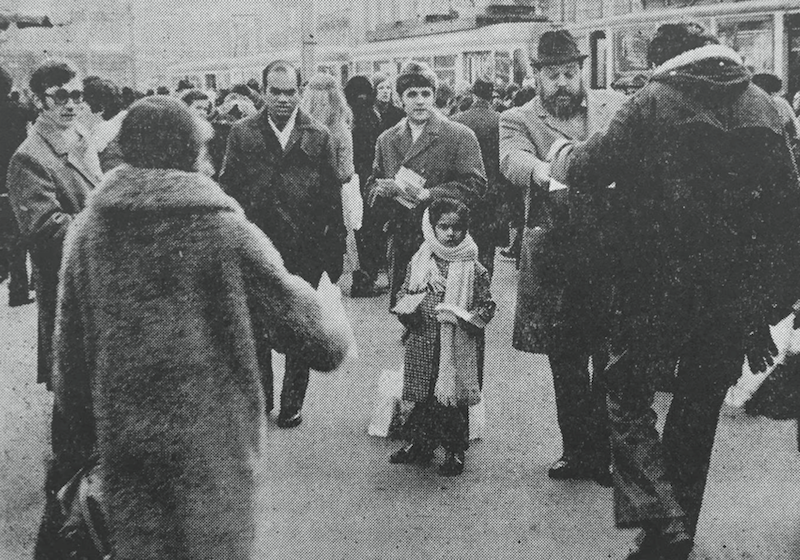
skupljaju pomoć za Međunarodni fond "Gladno dijete" na Jelačićevom trgu u Zagrebu.
Sheoray Singh Jain, Zagreb 21. travnja 1971. "Cijeli svijet - jedna obitelj” Ako želimo pogledom obuhvatiti cijelo čovječanstvo, a ne samo jednu osobu, onda moramo prihvatiti gornju tvrdnju iz Bhagavad-Gite. A taj je stav sigurno nužnost iz barem jednog razloga, ako ne i radi više njih, a to je "moderno doba” u kojem živimo. Pod "modernim dobom” smatram sve one aspekte koji ga određuju. Glavni među njima su tehnologija, politika i društveni odnosi. Ne pretjerujem kada kažem da je njihov razvoj postao ironija nesretne sudbine, ne samo ovog ili onog društva, nego cijelog čovječanstva. I u ovo doba, ako netko odluči promatrati čovjeka kao ljudsko biće, onda sigurno pokazuje zavidnu hrabrost i humani napor. Posljedica želje da "cijeli svijet bude jedna obitelj” je ova humanitarna organizacija, Međunarodni fond "Gladno dijete”, koji je tijekom zadnje dvije godine djelovao na spašavanju čovjeka od ironije njegove sudbine pomažući svoje buduće nasljeđe - djecu. Prvi puta sam upoznao tu organizaciju i njenog generalnog sekretara Vladimira Palečeka prije nešto više od jedne godine. Tijekom tog razdoblja promatrao sam ga i upoznao, te malo i pomagao. Postoji mnogo takvih organizacija u svijetu, ali ćete rijetko naći takvu koja nastoji pomoći podjednako svakom unesrećenom društvu, nesebično, bez političkih, socijalnih ili religijskih razlika, kao što to radi ovaj Fond. Kao građanin svijeta ponosan sam na ovu institutciju i pozivam ju da bude vjerna svojim humanim ciljevima i zasadama, te da ih ostane dostojna. Svesrdno želim ovoj dobroj instituciji još veći uspjeh i još veći zamah. Sheoray Singh Jain |
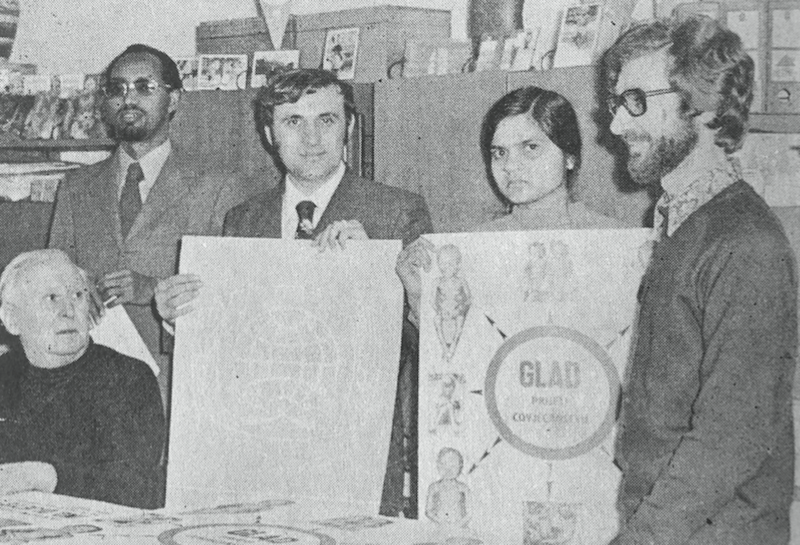
Snimljeno u kući Međunarodnog fonda "Gladno dijete" blizu Autobusnog kolodvora (Dubravkin trg br. 11),
sada sjedište Crvenog križa.
More information: Vladimir Paleček
Ante Gabric the Saint of Sundarban in India (4 web pages)
Fr. Ante Gabric, S.J. - An Apostle of the Sundarbans, Croatian missionary in Bengal, India
Irudhaya Jothi SJ: The Apostle of the Sundarbans / The Life and Mission of of the Servant of God Fr. Ante Gabric SJ, Kolkata (India), 2025
Mother Teresa and Croatians
Mother Teresa proclaimed a saint in 2016 and her connections with Croatia
Zvonimir Atletic photographs inspired by Mother Teresa
Zvonimir Atletic distinguished Croatian photographer
OZANA nonprofit organization for persons in need founded in 1991 in Croatia's capital Zagreb
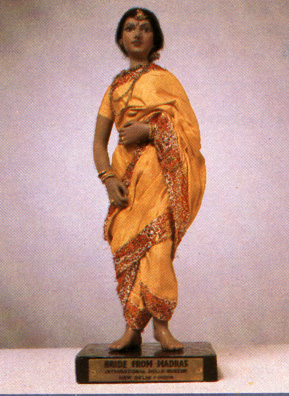
A doll donated by Indira Gandhi to The King of Dolls (Ljeposlav Perinić) in 1968, representing an Indian bride from Madras. Another doll was donated by Sarvepalli Radhakrishnan, president of India, in 1965. Since 1991 the dolls are kept in the Ethnographic Museum, Zagreb.


Mahatma Gandhi with young Indira in 1924

Miro Gavran, the greatest contemporary Croatian writer (translated into 41 languages, including three of India: Hindi, Kannada, Telugu):
- Miro Gavran's comedy to be premiered in Hyderabad in India August 19th 2012
- Miro Gavran distinguished Croatian writer was performed in India in Hindi in March 2013
- Miro Gavran's play Night of the Gods translated into Hindi will be played in Hyderabad India on August 3rd 2013
- Miro Gavran's play "All About Women" watched by theatre lovers in India
- Miro Gavran will have premieres in India, Russia and Germany in October 2017
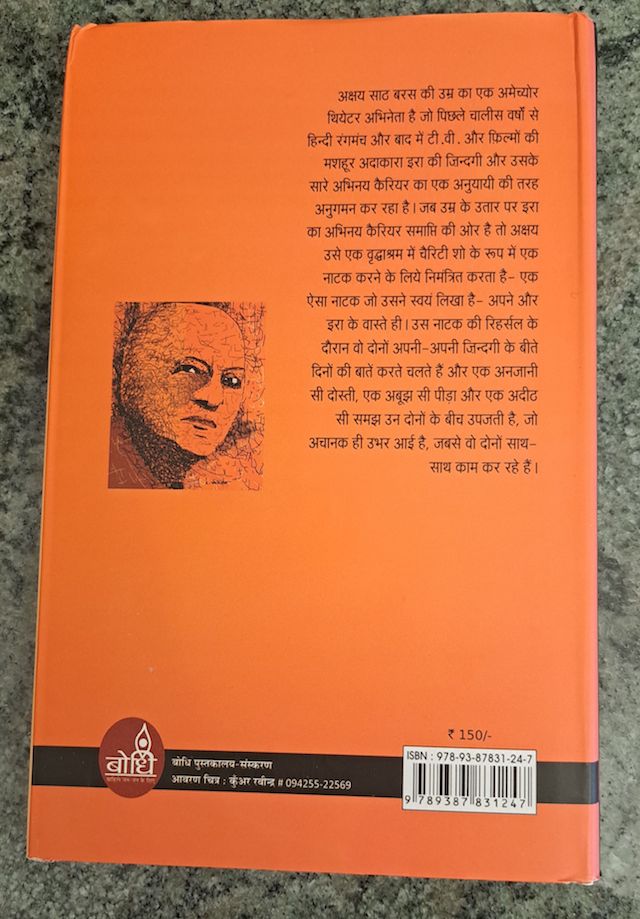
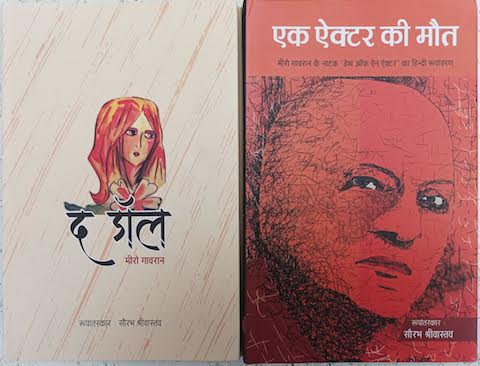
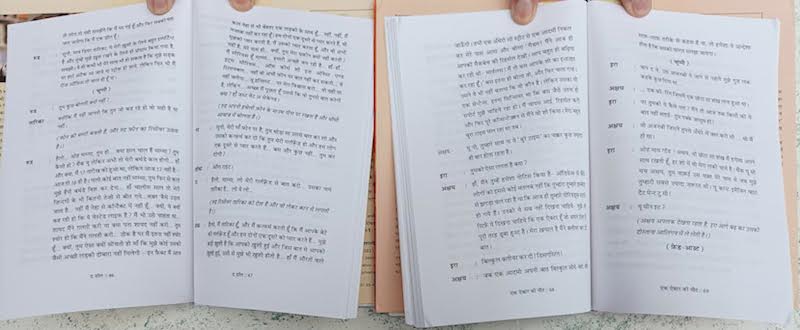
- Miro Gavran's plays "The Doll" and "Death of an Actor" published in Hindi in Jaipur, India 2018
Till 2020, his theatre plays had 12 or 13 appearances in India (his dramas: Kad umire glumac, Sve o ženama, Muž moje žene, Noć bogova, Lutka, Zaboravi Hollywood), and two of his books have been published in Hindu (When an Actor Dies and The Doll | Kad umire glumac i Lutka), in Jaipur. His plays were shown su Puni, Mumbai, Bangalore, Hyderabad i Jaipur.
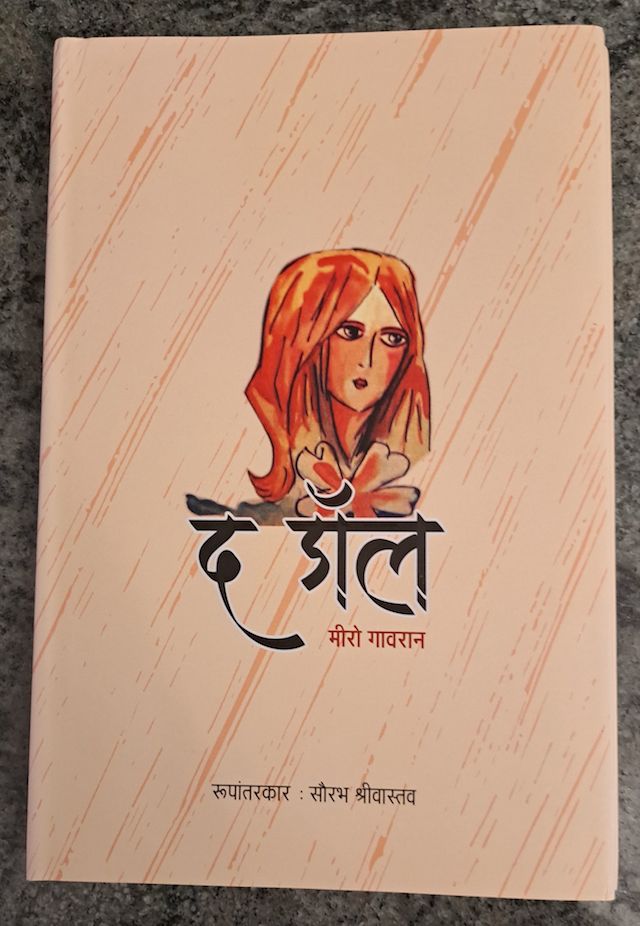
Miro Gavran: The Doll (the original Croatian title is Lutka)
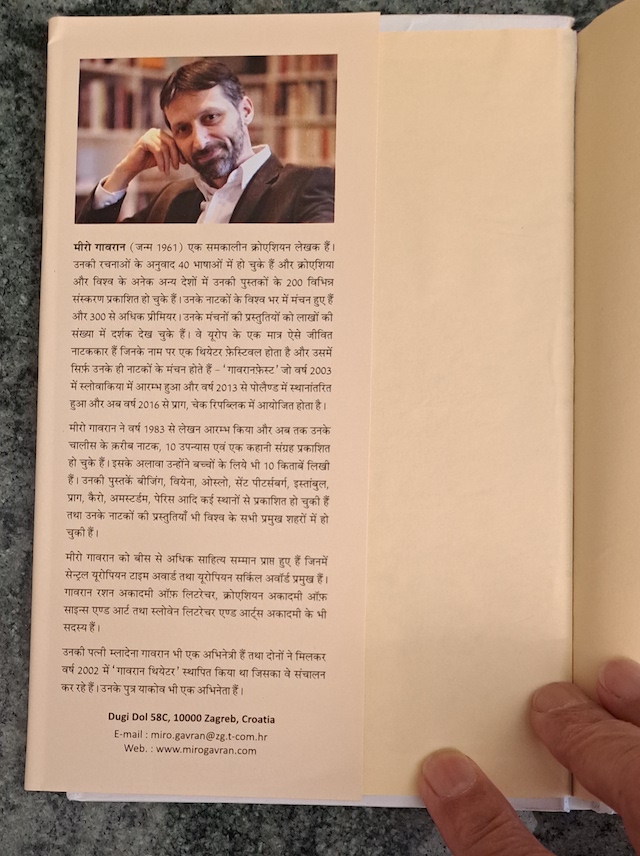
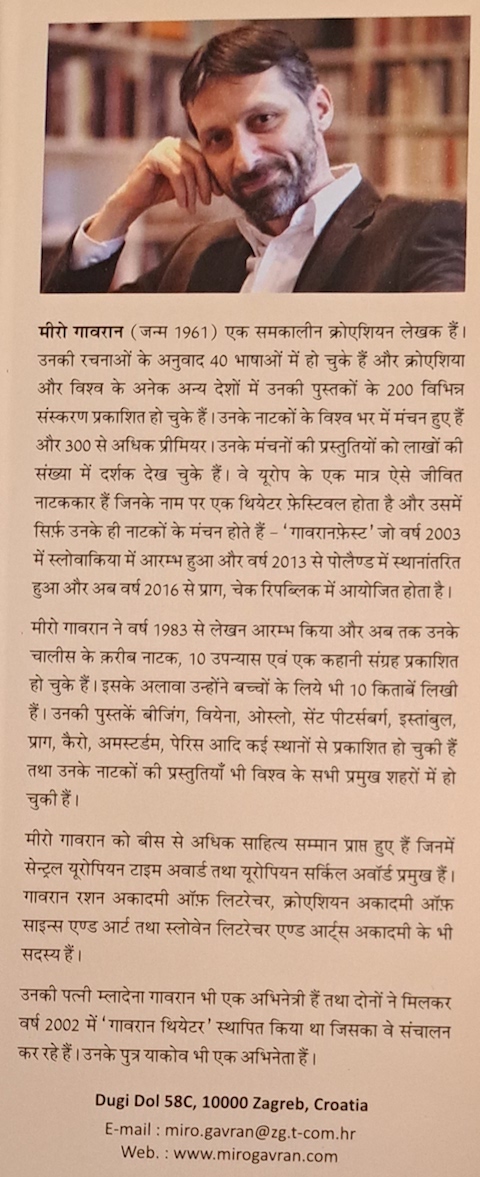
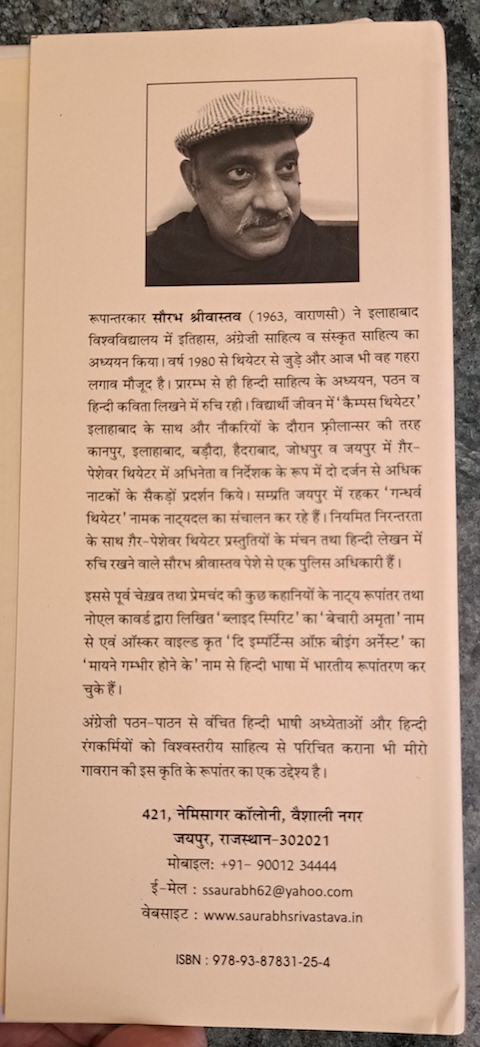
Translated by Srivastava Saurabh
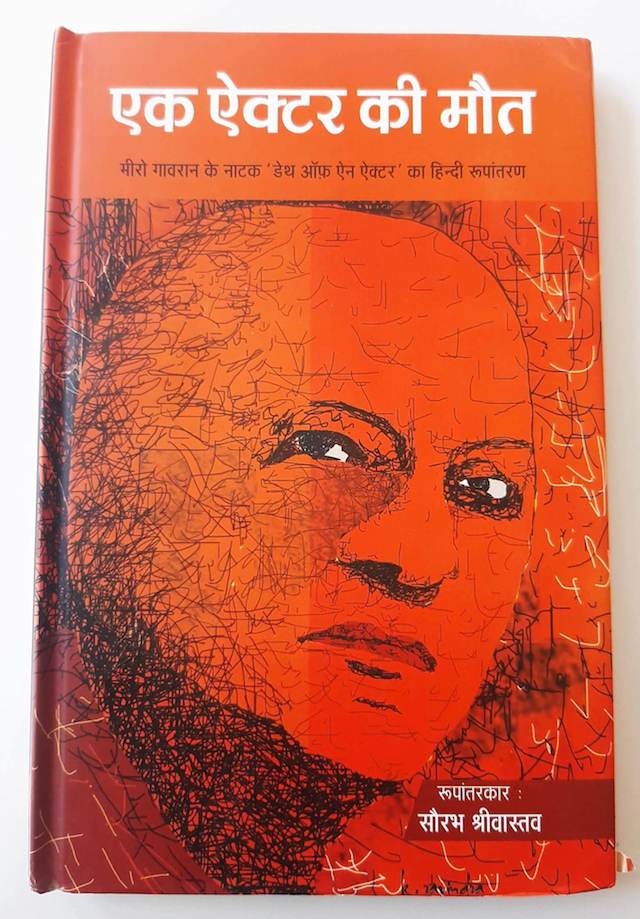
Miro Gavran: When the Actor Dies (the original Croatian title is Kad umire glumac)
Element publishing company in Zagreb established by Professor Neven Elezović in 1990s jointly with his wife Silva (both of them are mathematicians), is issuing six scientific Math journals (see http://ele-math.com/), in which numerous mathematicians from India (23 of them!) serve as members of editorial boards. Here are their names (some of them are retired, or died):
Five mathematicians from India and two American-Canadian mathematicians born in India are memebers of JCA [Journal of Classical Analysis], in which Professors Elezović and Tibor Pogany, University of Rijeka, are editors-in-chief:
- Vijay Gupta (also in JMI)
- Prasanna Kumar
- Vishnu Narayan Mishra
- Ram. N. Mohapatra (now in Orlando, also with MIA)
- Saminathan Ponnusamy
- Girja S. Srivastava
- Hari M. Srivastava, Victorija (JCA, JMI, FDC, MIA) [a memeber of four editorial boards!]
Classical analysis is very strong in India. In other journals, there are additional 16 mathematicians of Indian origin:
- Vasudeva Rao Allu (JMI - Journal of Mathematical Inequalities),
- Mohammad Mursaleen (JMI),
- Pankaj Jain (ex JMI),
- Ravi P. Agarwal (MIA, now in Kingsville, USA),
- Abdul Aziz (ex MIA - Mathematical Inequalities and Applications),
- Rajendra Bhatia (ex MIA),
- V. Lakshmikantham (late professor, University of Florida, ex MIA),
- Baburao G. Pachpatte (late professor, ex MIA),
- Ram U. Verma (Texas, ex MIA),
- Gadadhar Misra (OaM - Operators and Matrices),
- T.S.S.R.K. Rao (OaM),
- Rajendra Bhatia (ex OaM),
- Praveen Agarwal (DEA - Differential Equations and Applications),
- Bapurao C. Dhage (DEA),
- Varsha Daftardar-Gejji (ex FDC - Fractional Differential Calculus),
- J. Vasundhara Devi (ex FDC)
And even more surprising is that for already five years (upon the initiative of Ivo Elezović, Neven's elder son), the Element Publishing Company in Zagreb has a fruitful collaboration with educational institutions in India, the result of which is that as many as 15 educational booklets are issued in Croatian language, printed in India, and authored by Indian specialists, intended for children of kindergarten and very early age.
Professor Elezović also wrote a nice article about Srinivasa Ramanujan on 7 pp. (published in 2007), intended for mathematically gifted children in Croatia. He served as a president of the State Committee for Math Competitions in Croatia.
Upon the initiative of H. E. Raj Kumar Srivastava, the National Mathematics Day of India (marking the birthday of Srinivasa Ramanujan, the most famous Indian mathematician in history) is marked:
Tomislav Sikic delivered a lecture about Srinivasa Ramanujan a famous Indian mathematician, 2021
National Mathematics Day of India marked in Zagreb Croatia on 22nd December 2022
Indian Mathematics Day in Croatia 2024
Croatian-Indian Links
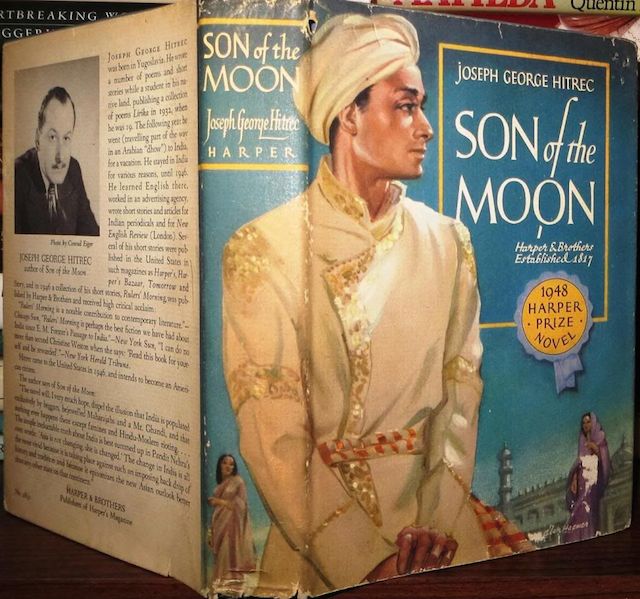
Joseph George Hitrec (Josip Juraj Hitrec, 1912-1972) published his novel Sun of the Moon in 1948, which won Harper's Prize. Pearl Buck wrote that it is an "outstanding novel" by the author who knows and loves India. Joseph Hitrec wrote for the Saturday Review and the New York Times. A photo is preserved from India, representing Hitrec with a private secretary of a Maharaja in India, with a huge elephant behind them; see Vladimir Novak, Croatians in America, Zagreb 1919, p. 63.
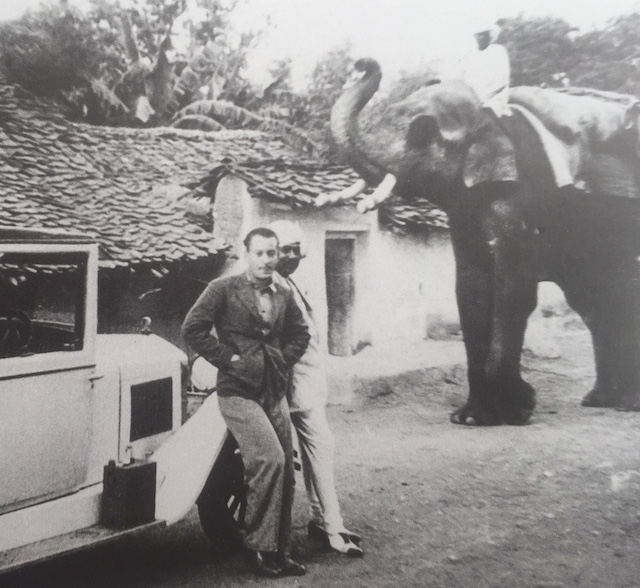
Joseph Hitrec in India. Source Vladimir Novak, Croatians in America, Zagreb 2019,
p. 63.
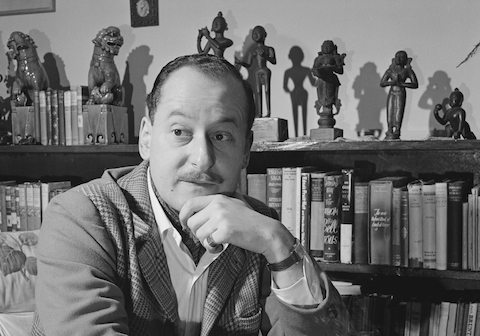
Joseph George Hitrec. Photo by Getty Images.
In Vladimir
Paleček's photomonograph War on
Hunger, we can find find numerous examples of humanitarian aid
of the Hungry Child
association (Zagreb) to Bangladesh (see [Paleček, pp. 139-140, 169-172,
193-195, 221-223, 240-241, 356]), with transportation secured among
others by Air India; see [Paleček, p. 372]. A citation of Indira Gandhi
appears in [Paleček, p. 177].
U Napretkovom kulturnom centru obilježena 150. obljetnica rođenja Stjepana Radića i Mahatma Gandhija
Tomislav Sikic delivered a lecture about Srinivasa Ramanujan a famous Indian mathematician
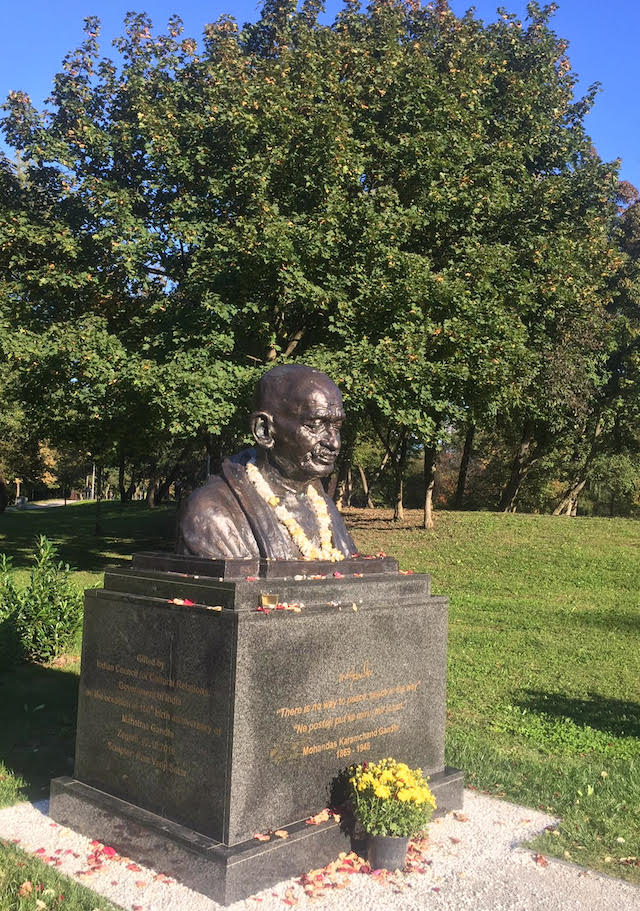
Monument of Mahatma Gandhi in Zagreb, park Bundek
Embassy of India, Zagreb Newsletter
Croatian and Indian cultural contacts through history
Croatian Glagolitic priests were translating the novel about Alexander the Great (including a description of his voyage to India), known as Alexandrida, already in the 13th century.
Especially important is the Petris Miscellany dating from 1468, written in Croatian Glagolitic Script, and kept in the National and University Library in Zagreb. It contains a Lucidarium - a Middle Age Encyclopedia written in the form of questions (of a student) and answers (of a teacher), in which India is also described: "A student asks: which land is closest to Eden? And the teacher said: ... Nobody can arrive there due to enormous mountains, and there are huge snakes. There is a land called India. And its name stems from the river named Indus... And in other (parts of) India there are people called Makkobi, that are 12 ells tall...". This text is also preserved in the Žgombić Glagolitic Miscellany.
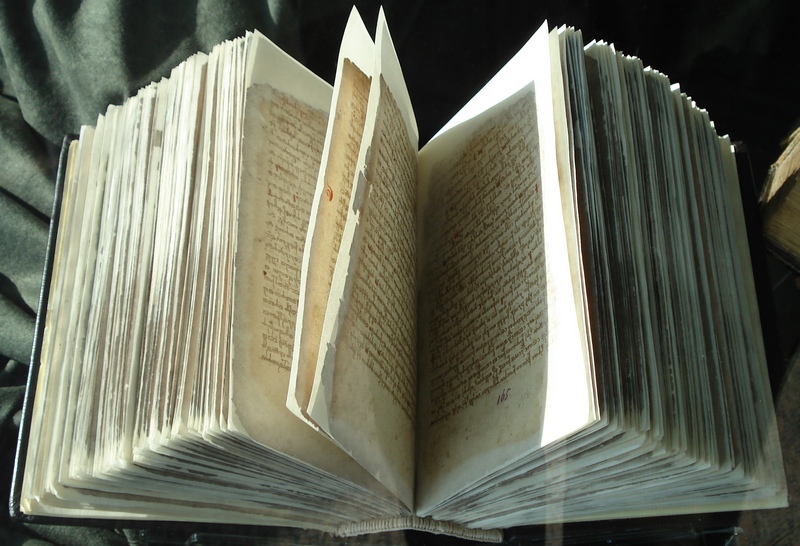
Petrisov zbornik iz 1468., vrhunski je spomenik hrvatske pisane kulture. Naziv je dobio prema jednom od vlasnika iz 19. st., Petrisu s otoka Krka. Čuva se u Nacionalnoj i sveučilišnoj knjižnici (NSK) u Zagrebu.

Indija
(India, written in Croatian Glagolitic quickscript in the Petris Miscellany from 1468, on p. 198a)
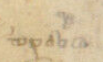
(Ind river, written in Croatian Glagolitic quickscript in the Petris Miscellany from 1468, on p. 198a)
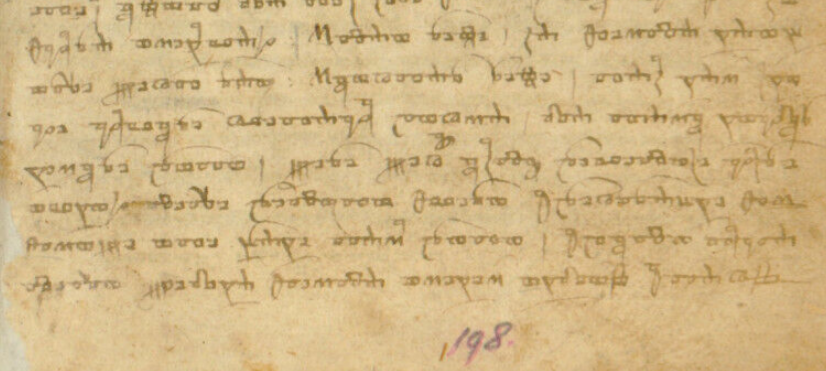
liže jest raju? Moistar reče: "Tako nam kni-
ge govore Svetago Pisma, da tamo nigdor
nemore priti. Jere jesu okolu prvelike gori
i v nih leže preljuti zveri i prstrašne zm
zmije i te brane tam priti. I poli tog
leži jedna zemla imenem Indija. I ta sje
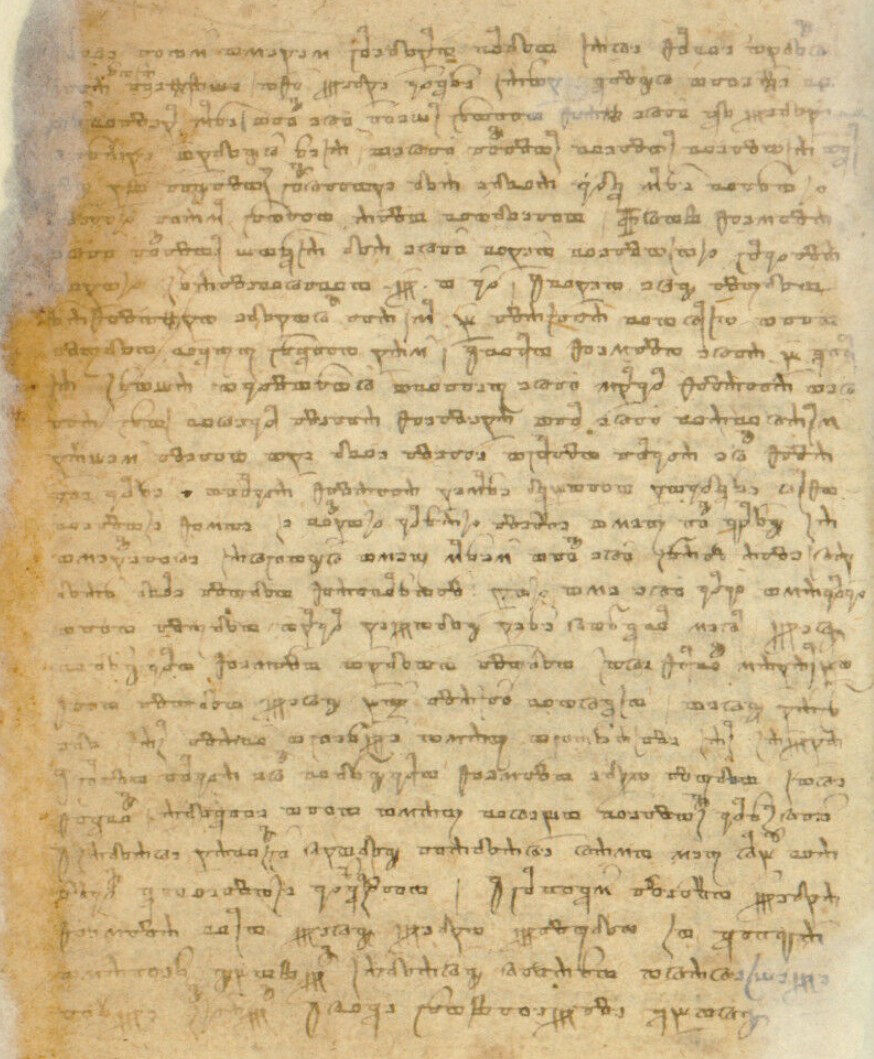
I ta rika tečet iz jedne gore ka ri...olus i teče v
...vleno more. I tu jest teško priti zač est od jedne
strane Indus reka i est tuliko veliko velika i od
...u nje tuliko pustine da edva gdo more v trih
...h tamo priti ali videti. (F) Sija zemla
est tuliko široka da est v nei velikih pogla-
vnih kralevstvi 30 i 4. I v nei esu ljudi
različni. Edni su takmo 2 lakta visoke i ti
ljudi vojuju proti nam. I v toi zemli est 2 oto-
ka Kriša i Gliris i v teju est mnogo zlata. I es
ta krik vsvego leta zelena. I to est va vsakom
našem leti i ne dve lete. I poli toga esu zla-
te gore i toga zlata nemore dobiti nigdore skozi
velike zmie ke vu nih gorah leže. I meju tu goru ka
imenuet se Kaspius i meju morem i tu est kral Aleksan-
dar dvoe ljudi zatvoril. Nih ime est Gog i Magog.
I ti ljudi s nogo ne jidu nere sirovo meso. Jesu
v drugoi zemli Indii ljudi ki se zovu Manakobi.
I ti ljudi jesu 12 lakt visoki. I esu napr-
ed kako lav i perje imaju i parakle kako kajna.
...
Two more pages (p. 199a) deal with India (written by a different hand), where the "third India" is described, starting from line 8.
p. 199a of the Petris Miscellany (1468):
e prijatele prizivaju i š nimi se snedaju i tako se vese-
le obnih. I poli toga leži edna zemla v koi raste
prpar. I ta zemla est plna zmii i gadi. I kada ta
prpar bude zrela, tada stvore ti ljudi velike krade
ogna i požare velike. I tako otpodje one zmie i potom z-
beru prpar i ot toga požara očrne prpar. A od nature e
bjel. I oni ljudi ki ga zbiraju bivaju živi nere do
osam ljet a do trih ljet ljet imaju. V tretoi In-
dii esu ljudi ki imaju pete naprijed a prsti nazad.
A v rukah imaju po osam prstov i v nogah. I ti ljudi
imaju pase glavi a odjevaju se lisičimi repi.
I kada hote govoriti tada viju glavami kako ps-
i. I potli toga esu ljudi ki su iz mlada sedi, a k s-
tarosti su črni. I potom esu ini ljudi ki imaju lje-
dnu nogu i ti brzo teku kako ptaci kada leti. I kad-
a na slnci sjede tada čine sen nad sobu od noge..
I takoi esu edni ki imaju edan rog vaski ih na svo-
em čele i pod tem rogom edno oko. Mlai reče: bivaju
li ti ljudi na vkup da se ne pobiju? Moistr reče: Bog
tako te ljudi est razdelil da se sniti na kup ne
mogu ni se boriti mogu a to est da su meju nimi vel-
ike vode i velike gore v kih esu preveliki i stra-
šni zveri i preljute zmie. Mlai reče: kako to more
biti vede nam tako knige svedoče da smo vs-
i ot ednoga človeka početi to est ot Adama? Kako su ti lju-
di na takove parti razdeleni? I tako nepodebne
p. 199b of the Petris Miscellany (1468):
obraze imaju. Moistr reče: Adam est bil naimudrei
nere e bil ni edan človek na svete. Razve mudroga
Solomona. I kada bje Adam iz raja izagnan, tad-
a on znaše vseh zljedi korenija i nih zale natu-
re i bješe edno zele takovo da gda bi ga bila ž-
ena okusila tude bi bila promenila plod nee
tela nature. I tada Adam ukaza svoim hćeram
ne jesti toga zelje. I vinu ta edna hći Ada-
mla nebudući mudra. Da norica i poče jesti.
Ot tjeh korjeni zelija itudi je da se premeni natur-
a ne ploda. I to bje v toi zemli ka se zove Indija.
I v toi zemi est edno zvere ko se zove gila.
I to zvere est napred kako lav a nazad est kako ve-
lblud [=deva, verbljud], tre [ter] ima 2 roga na glave svoei. I est vsa-
ki 2 lakta dlg. I kada se z drugim svadi ta-
da ta edan rog vrže v dile na hrbat a drugi-
m se brani i siječe. I kada mu bude trudan ta rog tad-
a ga vrže na hrbat a on dvignet ki e čil i opet se
nim rie. I to zvjere se ne boi nikogare razve ča e črno
a močno est kako na zemli tako va vodje. I ošče est v toi zem-
li edan zvjer ki se zove manastarijus. Ima gla-
vu kako človek a telo kako ona rep kako svina. Ima edan ro-
g na čele, 4 noge dlg i est svetal kako drag-
i kamen ki latinski zovet se karbonkulus i est
oštr kako britva. I ta zvjer est tuliko ljut ča koli
pred sobu utakne to vse rogom ubija. Is te zemle
p. 200a of the Petris Miscellany (1468):

Indija
(India, written in Croatian Glagolitic quickscript in the Petris Miscellany from 1468, on p. 200a)
prihodi edan kamen ki se zove jambar ki k sebje vle-
če železo. Mlai reče: Jure si mi mnogo povedal o b(oga)toi
zemli ka se zove Indija. Da povei mi ob toi zemli ka se
zove Partija. Moistr reče: Partija, se počne pri toi re-
cje ka se zove Tigra. I v toi zemli leži edan grad
ki se zove Persida. I v tom gradu počeše naiprvo čari
biti is te zemle prihodi edan kamen ki žge kako kopri-
va. I ošće est v toi zemli edan kamen ki v noći sveti
kako oganj. I govori se latinski silous. I toga kamena
pribiva i upada kako mjeseca. Mlai reče: povei mi ob
toi zemli ka se zvoe Mesopotamija. Moistr reče: Meso-
potamija zovet se po dveju reku ka tečeta [dvojina!] skoze tu ze-
mlju. I v toi zemli leži edan grad ki se zove Nonive,
a to est Nevonnit. I ta grad est tuliko širok kuliko i dlg
i est tuliko dlg ča more človek tri dni preiti prek nega.
I v toi zemli est Babilon, i toga grada est zid
širok 50 lakat a dveste lakat est visok. I est
ta grad 60 mil širok vprjek ili v dilje ima sto vra-
t mjedenih. I v toi zemli est edna vlast imenem Ara-
bija i ot tude prihodi Tamjen Imuro. I v toi zemli est
edna gora ka se zove Orjeb. Na toi gore Bog da Moisjeju
zakon. I potom leži edna zemla ka se zove Surija. I v to-
i zemli est edan grad imenem Damask. I ta grad
postavi kral Avraam. I poli toga leži edna go-
ra imenem Libanus. I pri toi gore leži Jardan ki s-
e počene vtoi zemli vkoi est Erusolim. I ta grad est us-
...
So, India is described in a little bit more than 3 pages of the Petris Miscellany (1468).
The name of India appears 5 times (in fact, six times; see just below), while the name of river Ind (Indus) twice.
According to Eduard Hercigonja (of the Croatian Academy of Sciences and arts), this book,
consisting of 700 pages, was written in the Ozalj region near Karlovac (south of the city of Zagreb).
Many thanks to the National and university Library, Zagreb, and to the creators of the glagoljica.hr portal.
* * *

The name of India appearing in the Breviary of Vitus of Omišalj dating from 1396,
kept in the Austrian National Library in Vienna. It can be seen on p. 400c (here, on line 5 on the right: "ot Indi-e").
Information by the courtesy of Milan Mihaljević, Fellow of the Croatian Academy of Sciences.

Ime Indije se pojavljuje u hrvatskim glagoljičkim misalima i brevijarima još u 13. i 14. st. Na moj upit akademiku Milanu Mihaljeviću pojavljuje li se ime Indije u glagoljicom pisanim izvorima starijim od Petrisova zbornika (1468.) dobio sam vrlo brzo potvrdan odgovor, koji prenosim niže. Indija se spominje dosta
često u našim brevijarima i misalima. Na brzinu sam pregledao neke
brevijare koji su stariji od Petrisova zbornika i evo što sam našao:
U Propriumu de tempore brevijara iz druge polovice 14. st. Indija se spominje na početku knjige o Esteri i to: u vatikanskome brevijaru Illirico 5 (sredina 14. st) na listu 215d (iže c(êsa)rstvova ot indie do etiopie), u Pašmanskome brevijaru (druga polovica 14. st.) na listu 172c (iže c(êsa)rstvovaše ot in’die do etiopie), u Drugome vrbničkom brevijaru (vjerojatno 3. četvrtina 14. st.) na listu 263c (iže c(êsa)rst(vo)vaše ot in'die · daže do etipie (sic!)), u Brevijaru Vida Omišljanina (1396.) na listu 400c (iže c(êsa)rstvovaše ot indie daže do etiopie), u Prvome vrbničkom brevijaru (u novijemu dijelu koji potječe s kraja 14. ili poč. 15. st.) na listu 256b (iže c(êsa)rstvovaše ot indie . daže do etiopie). Evo nešto još starije čega sam se sjetio. Indija se spominje u pazinskome fragmentu apokrifa O Bogorodičinoj smrti (kraj 13. ili poč. 14. st.). Na listu 1b stoji: toma ot in'die vьnutr'n'nêišihь , a na listu 2b: azь in'diiskuû stranu Zahvaljujem akademiku Milanu Mihaljeviću na trudu. |
The Legend about Thomas the Apostle, handwritten in Croatian Church-Slavonic language, appears in the Second Novi Breviary completed in 1495 (on f. 391 v). The mentioned legend is also kept in other Croatian Glagolitic breviaries.
Two manuscripts containing travels of Juraj Hus (Croatian from Rasinje near Koprivnica, captured by the Turks) in 1530s, participated on the side of the Ottman Empire in the military campain against the then Portugese port and fortress of Div in India. After many years, he managed to escape across Palestine and Egypt to his homeland Croatia.
In the testament of captain Vice Bune (Vicentio Buneo), written in the Naples and kept in the Dubrovnik Archives in Croatia, we can see that he left twenty Indian shirts ("vinti camisce dell'India") to his servant. He was also present in Goa in India, since he wrote in his testament: "nell'India nella citta di Ghoa ducati sei milla in circa di capitale con l'interesse di quindici anni".
India is mentioned by old Croatian Renaissance writers in Dubrovnik like Mavro Vetranović (1482-1576; Trgovci Armeni i Indijani) and Ivan Gundulić (1589-1638; Suze sina razmetnoga).
Libro od mnozijeh razloga, a book written in Croatian Cyrillic in the city of Dubrovnik (Ragusa), contains a legend about the Apostle Thomas, who was a Christian missionary in India. The book is kept in the National and University Library in Zagreb.
According to André Vaillant, distinguished French scholar, a prologue to "Dundo Maroje" by Marin Držić (1508-1567, a distinguished Dubrovnik Renaissance writer and litarary predecessor of Shakespeare and Moliére), was inspired by "A Word about Indian Empire".
National and University Library in Croatian capital Zagreb is in possession of a description of events from the life of Alexander the Great in India, written in Dubrovnik in Croatian Cyrillic. It is kept in the Collection of Ljudevit Gaj.
There is also a chakavian variant of Alexandrida, also written in Croatian Cyrillic, kept in the Lobokowitz collection in Roudnica in the Czech Republic. (Recall that chakavian is one of three major Croatian dialects, besides kajkavian and shtokavian.)
Marko Marulic (1450-1524), born in the city of Split, distinguished Croatian Renaissance spiritual writer, exploited motives from the Indian legend of Barlaam and Josaphat (= Budha) and from other Indian stories. It was included in his "De Institutione Beatque Vivendi", published in Antwerp in 1584.
When St. Franics of Xavier went to his mission in India, he brought with him only the following two books: the Bible and the above mentioned book by Marko Marulic. In the city of Zagreb, a short prayer was published in Croatian language: "A prayer to St. Francis Xavier, a great Indian apostle" (Molitva k s. ocu Ferencu Ksaverijušu, velikom indijanskom apoštolu). On the title page, there is saint's large photo accompanied with the following dedication: "To Saint Francis Xavier and his glory, to who Zagreb is deeply obliged" ("Svetomu Ferencu Ksavriju na diku komu je Zagreb dužen zahvalnost veliku").
The story of Barlaam and Josaphat and other Indian stories appear also in the works of a number of Croatian writers:
- Juraj Habdelić: Zrcalo Marijansko, Graz 1662, p. 33,
- Juraj Habdelić: Prvi oca našega greh, Graz 1674, p. 124,
- Petar Macukat: Život sv. Jezafata obraćen od Barlaama, Venecija 1798,
- Stefan Zagrebec: Hrana duhovna, Zagreb 1723, p. 492,
- Stefan Fuček: Historije s kratkem duhovnem razgovorom od poslednjeh dugovanj, Zagreb 1753, pp. 116-117.
- Matija Antun Relković: Æudoredne pripovidke Pilpaj-Bramine indijanskog mudroznanca iliti vladanje velikih i malih (prevedeno s francuskog), Vinkovci, handwritten in 1767, printed in 1875,
- Petar Budmani: Pet pripovijedaka (Five Stories, translated from Sanskrit), Dubrovnik 1867.
There is also an Alexandrida kept in the famous Croatian noble family of Zrinski, describing the life of Alexander the Great in India. It was trancribed in 1622 by Ivan Derečka from an earlier chakavian version. It belonged to the library of a poet and Ban (= Croatian Viceroy) Nikola Zrinski, who was a grandson of the legendary Nikola Zrinski of Siget (who tragically died in 1566).
Innocentius a S. Leopoldo, barefoot Carmelitan, was the sixth bishop of the Moghul Empire. He died in Malabhar in 1735 and originates "ex illustri de Kollonitz familia". His roots are from Croatia, from the noble family of Kolonić (Kollonitz).
Filip Vezdin, a pioneer of European indology
Antun Mihanović (1796-1861) is best known as the author of verses of the Croatian Anthem - "Our Beautiful Homeland" (Lijepa naša domovino). He learned Sanskrit by reading the books of Filip Vezdin, as well of the earliest English indologists. He was among the first ones to have noticed that Sanskrit is genetically related to Slavic languages, and published it in his study
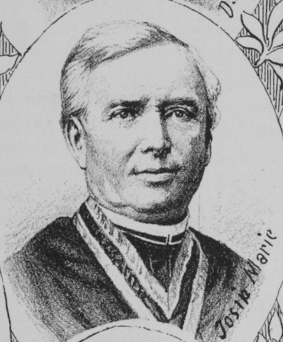
Josip Marić (1807-1883)
Josef Marić (1807-1883) wrote his book "Indijski mudroznanec ili način kak človek vu društvu ljudeh srečen biti more" (i.e., "An Indian Sage, or How a Man can be Happy among People") was published in Zagreb in 1833. Even earlier, in 1825, the text of almost identical title, "Indijanski mudroznanec" ("An Indian Sage") was published in Budim, within the book "Primudroga batona ćudoredni nauki... što ga je izdao po drugi put fra Marijan Jaić." See Fr. Maxner in Rad 74, p. 123.
The works of Rabindranath Tagore were published in Croatia since 1914, just a year after he received the Noble Prize for literature. His Gitanjali was translated by Pavao Vuk Pavlović and published as a series of seven articles in "Jutarnji list" (Morning News) in Zagreb. The same year, Croatian translation of Tagore's Gitanjali was published in the book form. That same year of 1914, the Gitanjali was published in German, French, Dutch, Italian, Russian, and Czech, and the preceding year i Swedish and Danish. We know of two of Tagore's books published in Zagreb in 1924 at the latest (advertised that year in the Stjepan Radić's Croatian Peasant Party / HSS newspaper Slobodni dom / Free Home, no 38 of 1924): Nacionalizam (Nationalism) and Ostvarenje ljepote i problem zla (Achievement of Beauty and the Problem of Evel).
In 1926, Rabindranath Tagore visited Croatia's capital Zagreb, where he spent two days. He was a guest of the Zagreb Radio, where he delivered three lectures: one about India, and two about Mahatma Gandhi. His Chitra was translated into Croatian by Pavao Vuk Pavlović, and emited on 26th May 1926 by the Zagreb Radio. It seems to have been the first case of presenting a Tagore drama via radio.
Ivana Brlić-Mažuranić, a famous Croatian writer (especially for children), wrote her book dealing with India, "Jaša Dalmatin, potkralj Gudžerata", published in Zagreb in 1937. The book is based on an article by her father, entitled "Melek Jaša Dubročanin u Indiji god. 1480-1528", in which he conludes that Melek Jaša, or Malik Ayaz, an important figure of the history of India in the turn of 15th to 16th centuries, viceroy of Gudjarat and governer of Indian port Div, could have his origins from the environs of Dubrovnik. We know of Croatian people on Egyptian vessles which between 1507 and 1509, and then again in 1538, were near the port of Div. On a ship captured by Portugese in 1509, they found books written "in lingua Dalmatica". Among their enemies in India, the Portugese encountered canon founders from "Esclvonia" and settlers from "European Turkey", which were able to recite Italian verses.
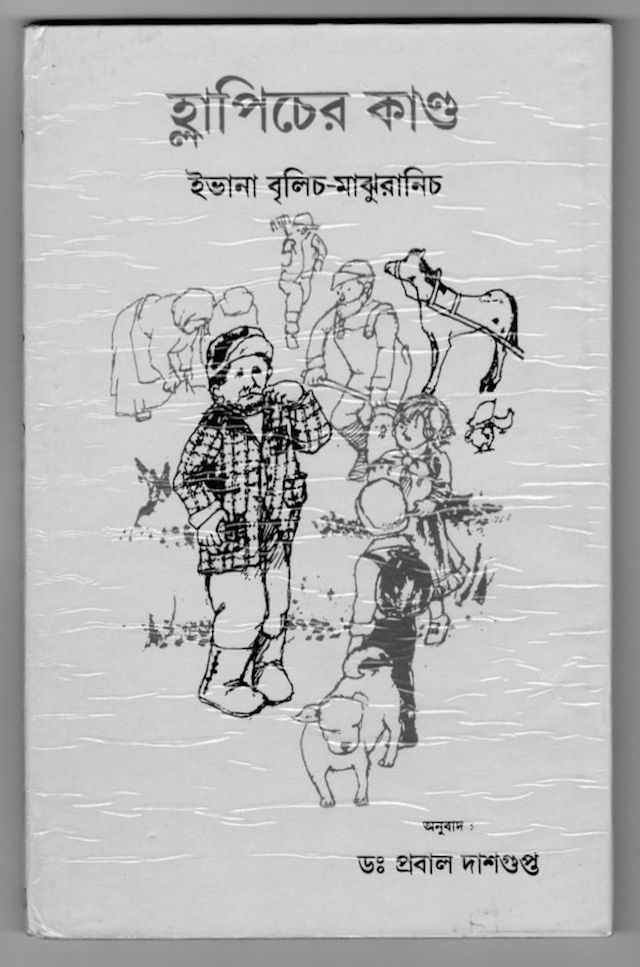
Translated from its Espernato edition (prepared by Maja Tiišljar) into Bengali by Dr Probal Dasgupta.
Many thanks to Spomenka Štimec for kindly sending us this information and the photo.
Apprentice Hlapić by Ivana Brlić Mažuranić had two Bengali editions, then as a series in three parts published by Samatat journal in Calcutta, as well as a separate edition published by Samathat sanstha in Calcutta (Kolkata).
Katarina Livljanić, distinguished Croatian expert in Medieval Music (lecturing at the University of Sorbonne in Paris, born in the city of Zadar, Croatia), created several music transcriptions based on old Croatian Glagolitic texts (mainly from the Petris Glagolitic Miscellany from 1468), kept in the National and University Library in Zagreb, which include the Indian story of Barlaam and Josaphat. They were publicly performed between 2010 and 2020, including in Zagreb.
'Barlaam
& Josaphat: Buddha–a Christian Saint?' by Dialogos and
Katarina Livljanić
Could you ever imagine that one of the most popular saints in the Christian calendar of the Middle Ages was - Buddha? After ten years of research in a multitude of libraries worldwide, Katarina Livljanić and the ensemble Dialogos, faithfull to their exploratory and fearless spirit, bring yet another surprise from the less known medieval lands, after its award-winning albums such as Dalmatica: Chants of the Adriatic (A395), Lombards & Barbares (A319), La vision de Tondal (A329), Judith: A Biblical Story from Renaissance Croatia (Alpha702). It is the incredible story of saints Barlaam and Josaphat, a christianized version of Buddha's life, which crossed over at least four religions and was transmitted through almost all the medieval languages. Powerful songs - incarnated by voice and instruments, sing the legend about the king's son, prince Josaphat, who leaves the noisy world of opulence to search for inner peace - songs which follow the path of his story from one medieval language to another, from Greek, Latin to Old Croatian, Italian, Church Slavonic…
This project is a unique new experience: a multimedia ebook, in French and English, is included in this CD. It tells the story of Barlaam & Josaphat and leads the listener/reader through one of the most intriguing labyrinths of medieval world. Through a rich and original video, audio and iconographic material, it opens the doors into the artistic creative process which transformed a medieval legend into a music performance.
Sources
- Ivan Andrijanić (ed.): Croatian - Indian Links, Thirty Chapters for Thirty Years of Diplomatic Relations 1992-2022, Croatian-Indian Society, Zagreb 2022 (Summary) (errata); see also Croatian-Indian Links
- 30 Years Celebration at Croatian Indian Society
(2024, video, almost 2 hours)
- Joginder Singh Nijjar, 0:10
- H. E. Raj Kumar Srivastava, 5:20
- Jane Sha, 14:20
- Ružica Čičak-Chand, 21:35
- Dražen Vikić-Topić, 45:35
- Darko Žubrinić, 53:50
- Ivan Andrijanić, 1:05:55
- Mislav Ježić, 1:19:00
- Joginder Singh Joginder, 1:29:50
- Petris Miscellany dating from 1468
- Vesna Badurina Stipčević (ed.): Hrvatska srednjovjekovna proza I. Legende i romani (Croatian medieval prose I. Legends and novels.), Stoljeća hrvatske književnosti, knj. 115, Zagreb, Matica hrvatska, 2013, 416 str. (prikaz)
- Marija-Ana Dürrigl: Hrvatska
srednjovjekovna proza II. Apokrifi, vizije, prenja, Marijini mirakuli.
Stoljeća hrvatske književnosti, sv. 116. Priredila i transkribirala
Marija-Ana DÜRRIGL. Matica hrvatska, Zagreb 2013., 357 str. (prikaz)
- Vesna Badurina Stipčević: Glagoljski Žgombićev zbornik kao književni izvor, Kolo Matice hrvatske, 2, Zagreb, 2015.
- Jugoslaveni i Indija, Zagreb 1965. This is a catalogue of an exhibition in Zagreb, 1965, Opatička 18, with a Foreword by Radoslav Katičić, distinguished Croatian linguist and indologist.
OZANA is a nonprofit organization for persons in need founded in 1991 in Croatia's capital Zagreb.
One of foreign donors to OZANA in 2010, was Indian Embassy, namely Mrs Salma Ansari, wife of the Vice President of India and Mrs Kiran Singh, a wife of Ambassador of India in the Republic of Croatia, who donated to OZANA two big looms and five sewing machines.
Croatian Library for the Blind in Zagreb visited by Joginder Singh Nijjar and Jane Sha
One of the sponsors of PingPongParkinson (founded and directed by Croatian-American rock and pop star Nenad Bach), supplying it with tennis tables, is STAG company coming from India.
Interview with Sunil Raghavan, an Indian living in Singapore
A short speech on the occasion of the end of ambassador mandate of H. E. Raj Kumar Srivastava,
Zagreb, 10th September, 2024
In 1468, a Croatian glagolitic book was hand-written, in which the name of India appears for the first time in the history of Croatian literature. In it, a pupil asked his teacher "Which land is the closest one to Paradise?". And the teacher answered: "There is a land surrounded with huge mountains and protected by dangerous animals. Its name is India. ... It consists of 34 large kingdoms..." The text about India in this book has three pages, and the name of India, written in the Croatian Glagolitic Script, appears six times.
It is hardly possible to enumerate all the fruits that Your ambassador years brought to deepening Croatian-Indian ties. Let me try to mention at least some of them, interesting from my own perspective.
1. Celebrating National Mathematics Day of India in Zagreb since December 2022, with participation of my esteemed colleagues from the University of Zagreb, and with active paricipation of Professor Dipendra Prasad, president of Indian Mathematical Society. The Math Day in India is dedicated to the memory of great Srinivasa Ramanujan.
2. Republishing the 1924 Croatian translation of the monograph entitled "Naš Gandhi", that is, "Our Gandhi". Its French original, published also in 1924, was "Mahatma Gandhi", written by Romain Rolland. Its Croatian translation seems to be the only one in which the title was so lovingly altered.
The projecct of republishing the book was initiation by my dear colleague and friend Mr. Joginder Singh Nijjar, with active participation of Mislav Ježić, Fellow of the Croatian Academy of Sciences and Arts, as well by the support of the Embassy of the Republic of India in Croatia.
3. To H. E. Raj Kumar Srivastava we owe a special gratitude for having initiated the project of publishing the monograph "Croatian-Indian Links", which was printed in 2022, on the occasion of 30 years since establishing diplomatic relations between the two countries. Its editor-in-chief was Professor Ivan Andrijanić, with editorial board consisting of Professor Mislav Ježić, Dr. Ružica Čičak-Chand, and myself.
Dear Mr. Ambassador, I wish You and Your beautiful family a good health, and many new fruits to come in the future.
Darko Žubrinić
The Faculty of Arts and Letters of the University of Zagreb has two Indology chairs: the Chair of Hindi and the Chair of Sanskrit. It is a result of very good relations between India and Croatia. This is the only such university in Europe. (This information was provided by H. E. Raj Kumar Srivastava, during his lecture at the Faculty of Croatian Studies of the University of Zagreb, in May 2024.)
- THE IX-TH DUBROVNIK INTERNATIONAL CONFERENCE ON THE SANSKRIT EPICS AND PURANAS
- THE X-TH DUBROVNIK INTERNATIONAL CONFERENCE ON THE SANSKRIT EPICS AND PURANAS - DICSEP 2023
Ružica Čičak-Chand (ur.): Hrvatsko-indijsko društvo / Kronološki zapis 30. godišnjice prisutnosti Indije u Hrvatskoj (1994.-2024.), Zagreb 2025.
Sadržaj knjige:
- Preface by Raj Kumar Srivastava, str. 3-4
- Celebrating three decades of croatian-indian friendship, by Joginder Singh-Nijjar, str. 5-6
- Osnivačka skupština i prve aktivnosti, str. 7-9
- Kronološki pregled aktivnosti HID-a od 1994. do 2024., str. 10-98
- Izdavačka djeltnost društva, str. 99-100
- Zaključno, str. 101-102
Croatian-Indian Society has its channel on YouTube:
https://www.youtube.com/channel/UC6LnpTYussf4-ylC_Sg-QhQ
which, among other things, contains the following six videos:
- Indian Students In Croatia Opportunity I (FER, Zagreb)
- Indian Students In Croatia Opportunity II (Medical studies, Zagreb)
- Indian Students In Croatia Opportunity III (Joginer Singh Nijjar, Zagreb)
- Indian Students In Croatia Opportunity IV (Dr. Prakash, FER)
- Indian Students In Croatia Opportunity V (Professor Dina Šimunić, FER)
- Book Launch in Mumbai
Jane Sha, many thanks for Your efforts!
There are surprisingly many additional films from India (and from neighbouring countries) dealing with Croatia:
- Study in Croatia | University of Zagreb | Scholarship | Admission | Eligibility
- University of Zagreb - Promotional video for international students
- Croatian Hindi speaking girl Carla
- Croatia Study Visa from India
- Croatia Study Visa Complete Process | Croatia Easy Visa Entry | Croatia Visa Requirements For Indian
- Documents Required For Croatia Student Visa | How To Apply Croatia Visa From India | Croatia Visa
- Student Benefits in Croatia | Study in Croatia For Indian Student | Work & Study in Croatia | Croats
- BENEFITS TO STUDY IN CROATIA || 2021 || GISS CONSULTANCY (ovo je vjerojatno iz Bangladesha, DŽ)
- Study and Work in CROATIA
- CROATIA FACTS IN HINDI || जन्नत जैसा है देश || CROATIA AMAZING FACTS AND INFROMATION || CROATIA 2021
- Amazing Facts About Croatia In Hindi || क्रोएशिया के रोचक तथ्य
Croatia - Japan Croatia - South America
Croatia - its History, Culture and Science